Rika Takemoto | Markins Ball Head
Theme
Landscape Photography
Photographer
Photographer Rika Takemoto
Date
April 2016
Location
Saitama Prefecture
Equipment
Markins
Canon
EOS 5D Mark III
EF24-105 4.0L IS USM
EF16-35mm F2.8L II USM
EF24-105 4.0L IS USM
EF16-35mm F2.8L II USM
Velbon
EI Carmagne 740
Review

Rika Takemoto
Landscape photographer. She began taking photographs as a hobby around 2004, and from 2005 spent approximately one and a half years traveling from North to South America. During that time, she photographed Canada, the United States, Mexico, Venezuela, Brazil, Argentina, Chile, Bolivia, and Peru with a Nikon D70. After returning to Japan in 2007, she became involved in managing a photo-sharing website, where she met landscape photographer Yoshiteru Takahashi and studied under him. She later became a freelance photographer, capturing landscapes across Japan and abroad under various themes. Her works have been featured in many camera magazines as well as numerous books, magazines, advertisements, and calendars.
Website: takemotorika.com
Landscape photographer. She began taking photographs as a hobby around 2004, and from 2005 spent approximately one and a half years traveling from North to South America. During that time, she photographed Canada, the United States, Mexico, Venezuela, Brazil, Argentina, Chile, Bolivia, and Peru with a Nikon D70. After returning to Japan in 2007, she became involved in managing a photo-sharing website, where she met landscape photographer Yoshiteru Takahashi and studied under him. She later became a freelance photographer, capturing landscapes across Japan and abroad under various themes. Her works have been featured in many camera magazines as well as numerous books, magazines, advertisements, and calendars.
Website: takemotorika.com
I had used ball heads from other manufacturers for many years, but a few months ago I switched to a Markins ball head. I would like to share why I chose a Markins ball head and, more fundamentally, why I prefer a ball head in the first place—especially for those who are new to landscape photography.
A tripod and head are indispensable for landscape photography. With so many products from various manufacturers on the market, it is not easy to find the one that suits you best. When I first started photographing landscapes, I only knew about simple tripods with integrated heads and had no understanding of tripod heads at all, so I often sought advice from senior photographers. Since all tripods share the same basic three-legged structure, they are relatively easy to choose based on weight, length, and portability according to personal preference. However, when it comes to heads, there is an initial hurdle in deciding between two very different types: 3-way heads and ball heads.
Using a Ball Head for Landscape Photography
Generally, 3-way heads are said to make it easier to level the camera and are therefore considered suitable for landscape photography. On the other hand, ball heads move freely as the name suggests and are regarded as ideal for subjects in motion, such as birds or sports. Following that logic, landscape photographers might choose a 3-way head. However, having used ball heads for years, I would like to recommend them for landscape photography as well.
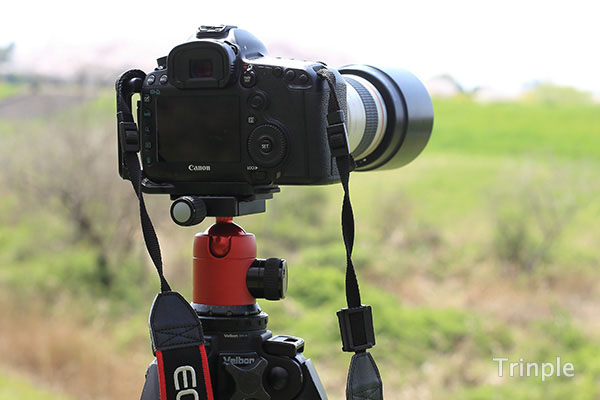
It is true that leveling can be more difficult with a ball head compared to a 3-way head. However, many cameras today come with built-in electronic levels, and external levels can also be attached, making this issue easy to overcome. What I personally consider most important is how quickly one can respond to the ever-changing expressions of nature. Compared to a 3-way head, which requires operating two handles, a ball head allows you to simply loosen one knob and intuitively point the camera exactly where your eyes are directed. This makes it possible to capture fleeting moments in nature without missing them.
There is also the question of whether a tripod is necessary at all. On my personal website, I receive many visits from searches such as “tripod unnecessary” or “tripod cumbersome.”
With the improved performance of modern digital cameras, more photographers now shoot handheld. However, if you seek a wide range of photographic expressions, such as early morning or nighttime shots, a tripod remains indispensable. Moreover, mounting the camera on a tripod and carefully composing the image using the LCD monitor is a crucial process in landscape photography, where attention to detail is essential. This is where the ball head truly shines. It allows you to enjoy the stability of a tripod while shooting with a feel similar to handheld photography. In addition, its simple mechanism makes it lightweight and compact, which is another major advantage.
For these reasons, I use a ball head for landscape photography.
Why I Recommend Markins Ball Heads
There are many ball heads available from various manufacturers, which can make choosing difficult. Here are three reasons why I strongly recommend Markins:
A tripod and head are indispensable for landscape photography. With so many products from various manufacturers on the market, it is not easy to find the one that suits you best. When I first started photographing landscapes, I only knew about simple tripods with integrated heads and had no understanding of tripod heads at all, so I often sought advice from senior photographers. Since all tripods share the same basic three-legged structure, they are relatively easy to choose based on weight, length, and portability according to personal preference. However, when it comes to heads, there is an initial hurdle in deciding between two very different types: 3-way heads and ball heads.
Using a Ball Head for Landscape Photography
Generally, 3-way heads are said to make it easier to level the camera and are therefore considered suitable for landscape photography. On the other hand, ball heads move freely as the name suggests and are regarded as ideal for subjects in motion, such as birds or sports. Following that logic, landscape photographers might choose a 3-way head. However, having used ball heads for years, I would like to recommend them for landscape photography as well.
It is true that leveling can be more difficult with a ball head compared to a 3-way head. However, many cameras today come with built-in electronic levels, and external levels can also be attached, making this issue easy to overcome. What I personally consider most important is how quickly one can respond to the ever-changing expressions of nature. Compared to a 3-way head, which requires operating two handles, a ball head allows you to simply loosen one knob and intuitively point the camera exactly where your eyes are directed. This makes it possible to capture fleeting moments in nature without missing them.
There is also the question of whether a tripod is necessary at all. On my personal website, I receive many visits from searches such as “tripod unnecessary” or “tripod cumbersome.”
With the improved performance of modern digital cameras, more photographers now shoot handheld. However, if you seek a wide range of photographic expressions, such as early morning or nighttime shots, a tripod remains indispensable. Moreover, mounting the camera on a tripod and carefully composing the image using the LCD monitor is a crucial process in landscape photography, where attention to detail is essential. This is where the ball head truly shines. It allows you to enjoy the stability of a tripod while shooting with a feel similar to handheld photography. In addition, its simple mechanism makes it lightweight and compact, which is another major advantage.
For these reasons, I use a ball head for landscape photography.
Why I Recommend Markins Ball Heads
There are many ball heads available from various manufacturers, which can make choosing difficult. Here are three reasons why I strongly recommend Markins:
- Outstandingly Lightweight and Compact Despite High Load Capacity
When I first held a Markins ball head, I was amazed at how light and compact it was. After removing my previous ball head and attaching the Markins Q3i-RD Knob Shoe Ball Head, I lifted the tripod and was truly impressed by the difference, even though the tripod itself was the same. It may sound exaggerated to praise lightness so much, but for landscape photographers who carry various gear and walk around all day, lightweight equipment is an enormous advantage. On top of that, its load capacity exceeds that of the ball head I had previously used. That was a pleasant surprise.
- Excellent Holding Power
Because it is so lightweight and compact, I was initially concerned about its holding power—but those concerns proved completely unfounded. I use the knob type, and with just two or three turns, it firmly grips the camera without any movement. No matter how I tilt the camera, it stays securely in place, allowing me to try various compositions with confidence. The limit dial on the ball-lock knob is also very convenient, enabling me to adjust the resistance to my preference and quickly return to a favored position, making fine composition adjustments easy.
- Available in Wine Red
Many people—especially women—may find that color plays a significant role when choosing products. I am no exception; the color was a major deciding factor for many of the items I use daily, including my laptop, mouse, and smartphone. In a market where most camera accessories are available only in black, Markins ball heads come in two colors: black and wine red. I chose wine red without hesitation, and it lifts my spirits every time I use it.
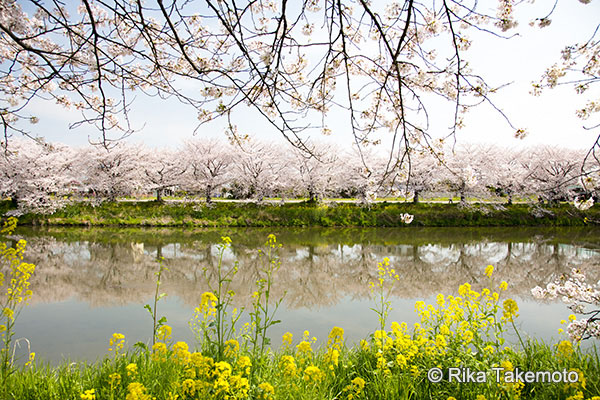
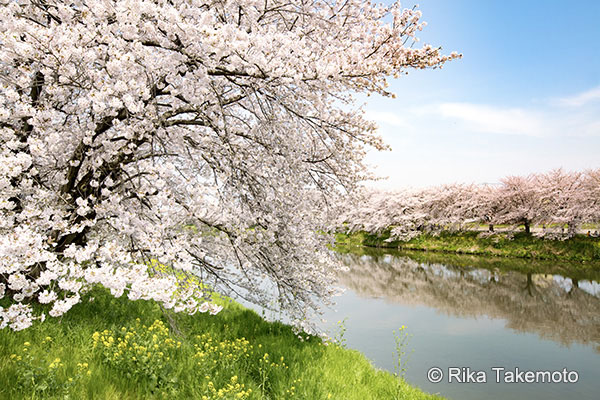
● Spring Riverside
≪Shooting Data≫
Canon EOS 5D Mark III + EF16-35mm F2.8L II USM
F8 1/100 sec ISO200
≪Shooting Data≫
Canon EOS 5D Mark III + EF16-35mm F2.8L II USM
F8 1/100 sec ISO200
● Cherry Blossoms in Full Bloom
≪Shooting Data≫
Canon EOS 5D Mark III + EF16-35mm F2.8L II USM
F8 1/125 sec ISO200 +1 EV
≪Shooting Data≫
Canon EOS 5D Mark III + EF16-35mm F2.8L II USM
F8 1/125 sec ISO200 +1 EV
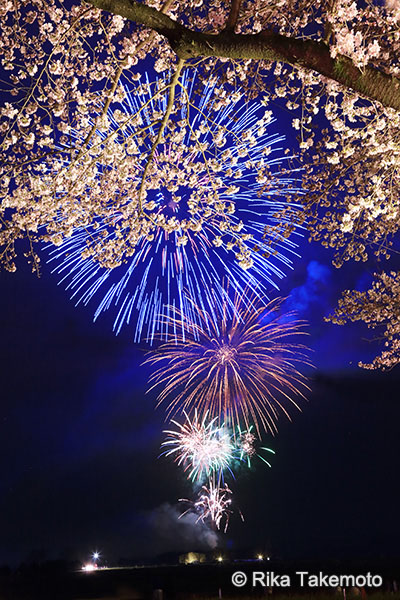
● Cherry Blossoms and Fireworks
≪Shooting Data≫
Canon EOS 5D Mark III + EF24-105 4.0L IS USM
F8 1.3 sec ISO800 -1 EV
≪Shooting Data≫
Canon EOS 5D Mark III + EF24-105 4.0L IS USM
F8 1.3 sec ISO800 -1 EV